Legislative
SB 907
Title: Vehicles: DUI: Vehicular Manslaughter: Violent Felony
Author: Senator Bob Archuleta (D-Norwalk)
Chamber:Senate
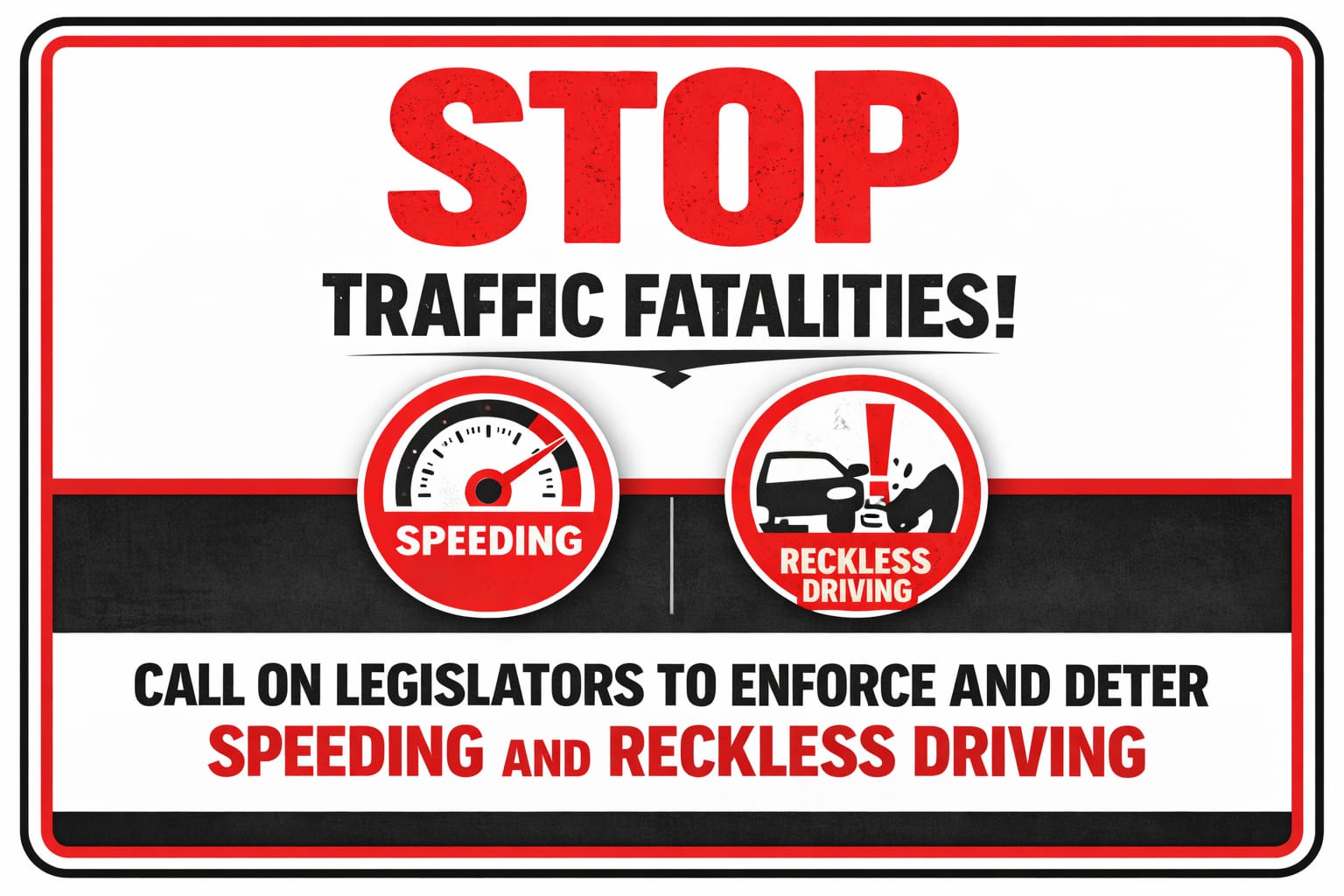
The Problem: Vehicular manslaughter is not classified as a “violent” felony under California law, meaning convicted drivers serve only a fraction of their sentences before release. California also has limited pathways to charge repeat DUI offenders with murder even when they kill.
What SB 907 Would Do:
Add vehicular manslaughter with “gross negligence” to the state’s list of violent felonies
Allow consecutive sentencing for crashes involving multiple victims
Add a three-year sentence enhancement for drivers with a prior felony DUI within 10 years
Increase punishment for hit-and-run perpetrators who have a prior DUI conviction
Expand “Watson advisements” — making it easier to charge repeat DUI offenders with second-degree murder if they kill someone after previously being charged with DUI
Status: In progress (as of early March 2026)
AB 1546
Title: Vehicles: Driving Under the Influence
Author: Assemblymember Nick Schultz (D-Burbank), Chair of the Assembly Public Safety Committee Chamber: Assembly
Introduced: January 2026
The Problem: California currently requires four DUI convictions within 10 years before a driver can be charged with a felony — one of the weakest thresholds in the nation.
What AB 1546 Would Do:
Make a third DUI within 10 years a formal “wobbler,” allowing prosecutors to charge it as either a misdemeanor or a felony, with potential jail time of 120 days to three years
Treat four or more DUI convictions within 10 years as mandatory felonies with longer jail sentences
Extend license revocation to five years for drivers with four or more DUI convictions within a decade (current law sets a four-year revocation for three or more convictions)
Status: In progress.
AB 1662
Title: Driving Record: Points: Misdemeanor Diversion
Author: Assemblymember Lori Wilson (D-Suisun City), Chair of the Assembly Transportation Committee Chamber: Assembly
Introduced: January 29, 2026
The Problem: A criminal justice reform law allowed judges to dismiss misdemeanor vehicular manslaughter charges for drivers who completed a diversion program. In an unintended consequence, those drivers not only avoided a criminal conviction — they also avoided any points on their driving records. A driver could kill someone and keep a clean DMV record.
What AB 1662 Would Do:
Require courts to notify the DMV when a misdemeanor vehicular manslaughter case is dismissed upon completion of diversion
Require the DMV to assess the applicable driving record points regardless of the dismissal, closing the loophole
Status: In committee
SB 953
Title: Driving Record: Points: Vehicular Manslaughter
Author: Senate (author not confirmed in available sources — Senate companion to AB 1662)
Chamber: Senate Introduced: February 2, 2026
Referred to Committee: Senate Transportation Committee (February 11, 2026)
The Problem: Same as AB 1662 — drivers who complete diversion for misdemeanor vehicular manslaughter avoid both a criminal conviction and DMV points on their record.
What SB 953 Would Do:
Identical in intent to AB 1662, but introduced in the Senate
Would impose 2 violation points against a driver’s record for a misdemeanor vehicular manslaughter violation that was dismissed upon completion of diversion
Ensures the Senate has a parallel vehicle to move this reform forward concurrently with the Assembly bill
Note: SB 953 and AB 1662 are companion bills addressing the same diversion loophole from their respective chambers.
SB 1198
Title: Safer Driving Act / Vehicles: Reckless Driving: Impoundment
Authors: Senator Caroline Menjivar and Senator Bob Archuleta (D-Norwalk)
Chamber: Senate
Introduced: February 20, 2026
The Problem: Repeat reckless drivers face insufficient consequences under current law, allowing them to remain on the road and continue endangering others.
What SB 1198 Would Do:
Strengthen penalties for reckless driving, with particular focus on repeat violators
Expand license suspension periods for reckless driving offenses
Authorize vehicle impoundment for repeat reckless drivers as a deterrent measure
AB 1830
Title: Vehicles: DUI: Ignition Interlock Devices (All Offenders)
Author: Assemblymember Cottie Petrie-Norris (D-Irvine)
Chamber: Assembly
The Problem: California is one of the few states that does not require first-time DUI offenders to install ignition interlock devices (IIDs). Previous efforts by Petrie-Norris failed in 2025 due to DMV budget concerns and civil liberties objections.
What AB 1830 Would Do:
Mandate ignition interlock device installation for ALL DUI offenders, including first-time offenders
An IID requires the driver to pass a breathalyzer test before the vehicle will start
Would bring California in line with the majority of other U.S. states
AB 1687
Title: Vehicles: Repeat DUI: License Revocation
Author: Not confirmed in available sources
Chamber: Assembly
The Problem: Current license revocation periods for repeat DUI offenders are insufficient to protect the public.
What AB 1687 Would Do:
- Extend the length of license revocations for repeat DUI offenders beyond current standards
Status: In progress
AB 1605
Title: Vehicles: DUI: “No Alcohol Sale” ID Designation
Author: Assemblymember Rhodesia Ransom (D-Tracy)
Chamber: Assembly
The Problem: Repeat DUI offenders and those whose DUIs caused great bodily injury face few barriers to purchasing alcohol after their cases are resolved.
What AB 1605 Would Do:
Give judges discretion to add a “no alcohol sale” designation to the state IDs of people with multiple DUIs, or who have been involved in a DUI case involving great bodily injury
- Retailers would be required to decline alcohol sales to individuals with this designation
Status: In progress.
Lackey/Petrie-Norris Bill (Bill Number TBD)
Title: Vehicles: Driving Record: Vehicular Manslaughter Points Increase
Authors: Assemblymember Tom Lackey (R-Palmdale) and Assemblymember Cottie Petrie-Norris (D-Irvine)
Chamber: Assembly
Status: Introduced; bill number not yet confirmed in available sources
The Problem: A driver who kills someone through vehicular manslaughter receives only 2 DMV points — the same number as a non-injury DUI or a hit-and-run collision.
What This Bill Would Do:
Increase the number of DMV violation points a vehicular manslaughter conviction adds to a driver’s license from 2 points to 3 points
- More accurately reflects the gravity of the offense relative to lesser violations
Alanis DUI Training Bill (Bill Number TBD)
Title: Law Enforcement: Advanced DUI Enforcement Training
Author: Assemblymember Juan Alanis (R-Central Valley), former law enforcement officer
Chamber: Assembly
Status: Announced at February 2, 2026 press conference; bill language being finalized
The Problem: While all California law enforcement officers receive basic traffic enforcement training, many local and county departments lack specialized DUI enforcement instruction. Under-trained officers must call in additional support during DUI traffic stops, reducing efficiency and response capacity.
What This Bill Would Do:
Expand advanced DUI enforcement training (including drug recognition) for police officers statewide
Make specialized training more widely available to local and county departments
- Improve enforcement efficiency and free up both local and state law enforcement resources
License Suspension Timing (Bill Number TBD)
Author: Assemblymember Lori Wilson (D-Suisun City)
Status: Announced February 2, 2026; language being finalized
The Problem: License suspensions and revocations currently begin at the time of conviction and can actually expire before a driver is released from prison — meaning a convicted vehicular manslaughter driver may walk out of prison with a valid license.
What This Bill Would Do:
Require license suspensions and revocations to begin when a driver is released from incarceration, not at the time of conviction
Could effectively extend the period a dangerous driver is without a license by years
LAWS ALREADY IN EFFECT AS OF JANUARY 1, 2026
The following bills passed in 2025 and are now California law:
AB 289 — Authorizes Caltrans to run a speed safety pilot program using fixed or mobile radar or laser systems on highways, with violations mailed to registered vehicle owners.
AB 321 — Allows courts to determine whether a “wobbler” case proceeds as a felony or misdemeanor at any time before trial (previously only at the preliminary hearing stage), giving defense attorneys more flexibility and giving prosecutors more leverage for early resolution.
AB 366 (Petrie-Norris) — Extends the statewide Ignition Interlock Device pilot program for specified DUI offenders through January 1, 2033. Drivers required to participate must use a breath-activated device that prevents vehicle start if alcohol is detected.
AB 382 — Allows local governments to lower school zone speed limits from 25 mph to 20 mph by ordinance through January 1, 2031. After that date, 20 mph becomes the automatic statewide school zone standard where properly signed.
AB 390 (Wilson) — Expands California’s “slow down, move over” law to require drivers to change lanes or reduce speed for any stationary vehicle displaying hazard lights or warning devices — not just emergency or maintenance vehicles. Repeat violators face fines up to $1,000.
AB 413 — “Daylighting” Law (signed October 2023, effective January 1, 2025)
Prohibits parking within 20 feet of any marked or unmarked crosswalk on all public roads statewide, including residential streets. The distance is reduced to 15 feet where a curb extension (bulb-out) is present. South El Monte Red curb paint is not required for the law to be enforceable — drivers can be cited even at unpainted intersections. City of Pasadena Local jurisdictions are responsible for enforcement, and compliance and red curb painting have been inconsistent across California as of early 2026. Palo Alto Online
The goal is improved sightlines between drivers and pedestrians at crosswalks, particularly for children and other vulnerable road users. Prior to AB 413, California was one of the only states without a statewide daylighting requirement — over 40 states already had such laws. SFMTA
SB 720 (Ashby) — Authorizes local governments to operate automated camera programs to enforce red-light violations. Violations are civil penalties only and do not result in DMV license suspension or points.
SB 766 (Allen) — The CARS Act, effective October 1, 2026: prohibits auto dealers from misrepresenting total vehicle costs and financing terms, and provides buyers a three-day right to cancel purchases under $50,000.
AB 1087 (Patterson) — Increases probation for vehicular manslaughter while intoxicated or gross vehicular manslaughter while intoxicated from a maximum of 2 years to a mandatory range of 3 to 5 years.
AB 1085 (Stefani) — Makes it an infraction with a $1,000 fine to manufacture in California any product designed to obscure or interfere with the visual or electronic reading of a license plate.
Problem Laws:
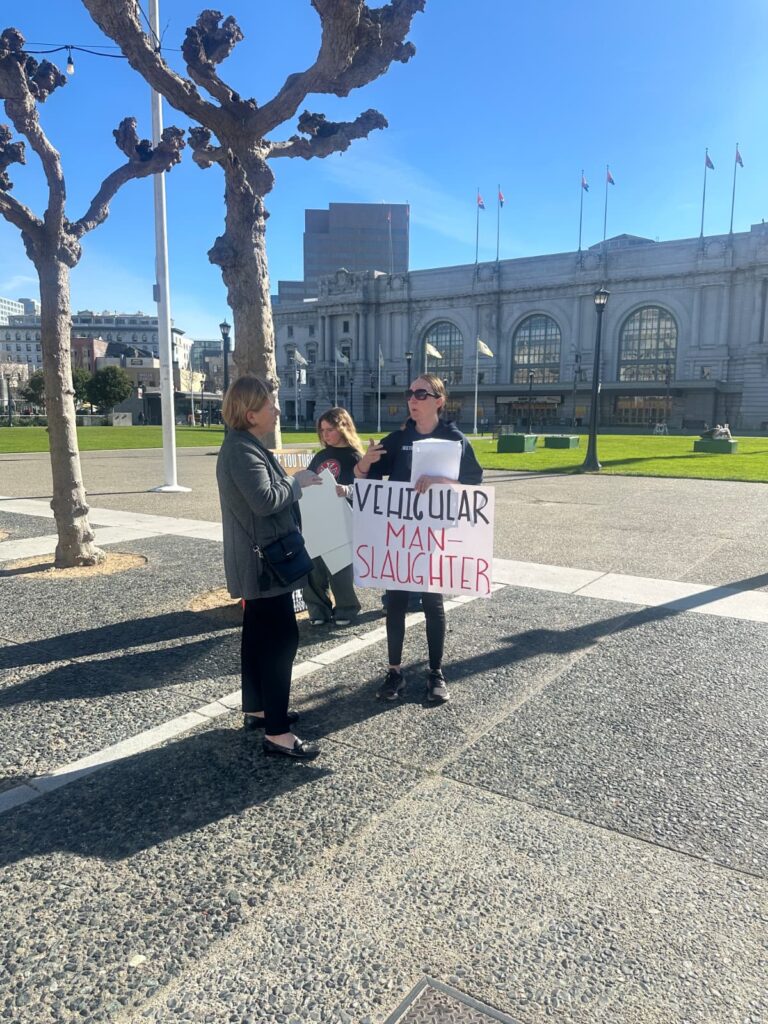
- Judicial Discretion: Judges can grant diversion for misdemeanors without the prosecutor’s consent.
- Misdemeanor Focus: Primarily designed for low-level crimes, but broad wording includes potentially serious recklessness if charged as a misdemeanor, rather than felony vehicular manslaughter.
- Outcome: If the defendant completes court-ordered terms (e.g., classes, community service), the case is dismissed, and the arrest is deemed to have never occurred.
- Excluded Offenses: Not all crimes are eligible. Exclusions include domestic violence, offenses requiring sex offender registration, and
Proposed Reforms:
Seven Systemic Failures Behind Reckless Driving Fatalities in California
Comprehensive Measures to Reduce Traffic Fatalities in California Issue
Traffic fatalities are not accidents; they are preventable outcomes of policy choices. While roadway design plays a critical role, it must be paired with consistent enforcement and meaningful consequences to change behavior and save lives.
Treat Reckless Driving Causing Death as a Violent Felony in California Issue
California experiences thousands of traffic fatalities every year. While each death is tragic, the legal system treats most traffic deaths as accidents rather than preventable violent acts. Reckless or negligent drivers who kill often face light penalties, probation, or no charges at all.
Treat Reckless Driving Causing Death as a Violent Felony in California Policy Proposal (Revised and Expanded)
California should modernize its legal framework to recognize that reckless driving causing death is inherently violent in its impact and foreseeable in its risk.
Fatal Reckless Driving Investigation Integrity Act (California) Purpose
To ensure thorough, unbiased, and standardized investigations in all fatal traffic collisions caused by reckless or unlawful driving by requiring immediate testing, evidence preservation, and vehicle examination of the responsible driver and vehicle.
Fatal crashes often involve drivers who are released from the scene without comprehensive testing, while victims undergo detailed toxicology examinations. This imbalance can compromise evidence and hinder accurate determination of impairment or criminal liability.
This legislation establishes mandatory investigative procedures to preserve critical evidence
Strengthening Accountability and Deterrence in Preventable Fatal Traffic Violence
Traffic violence has emerged as a major public safety crisis. Preventable crashes caused by reckless or grossly negligent driving are resulting in increasing fatalities and catastrophic injuries. Current legal, prosecutorial, and sentencing frameworks often fail to adequately reflect the severity and irreversibility of loss of human life, undermining deterrence and public confidence in the justice system.
Public virtue in reducing traffic violence and fatalities
Public virtue in reducing traffic violence and fatalities means recognizing that safe driving is not just a legal obligation — it is a moral responsibility to protect human life.
Fatalities Reporting
Why teen drivers who cause fatal crashes are often not held fully accountable
Insurance data integrity assessment
California Private Passenger Auto: Data Integrity Gaps and Underwriting Risk Factors